FarmAssistance
How to Check If a Pesticide Is Still Legally Approved (By Country)
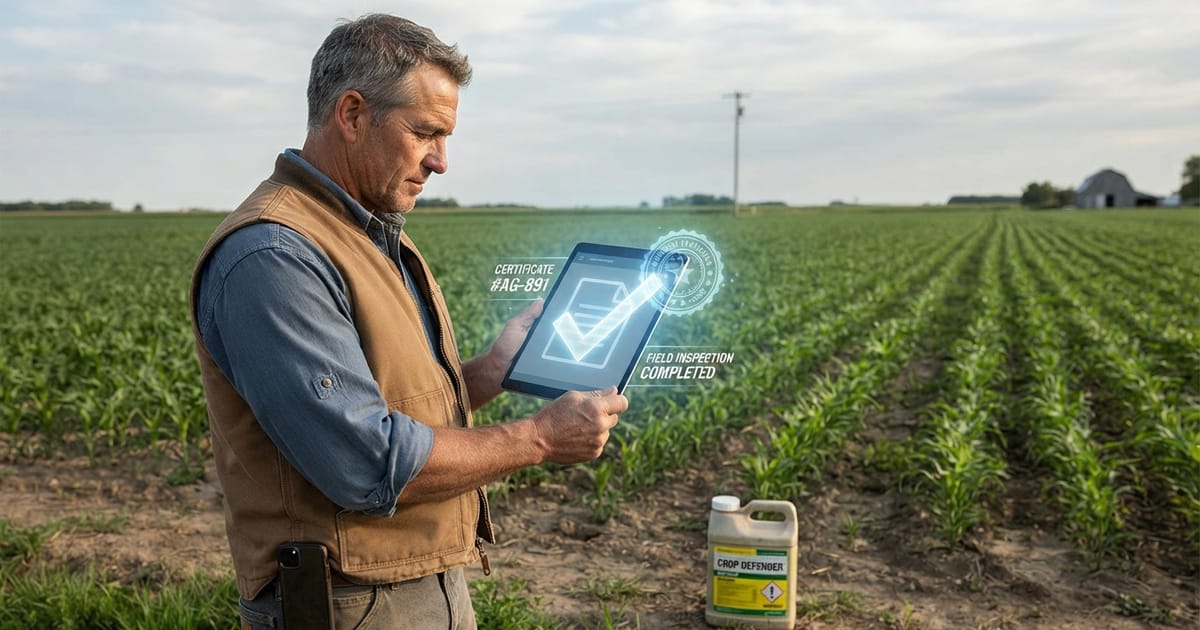
A pesticide label doesn't expire the day you buy the product — but the underlying registration can. Active substances get re-evaluated, products get withdrawn, and uses that were fine last season can be restricted or banned this one. If you're applying a product based on a label from a few years ago, or advice from a neighbor, you're trusting that nothing has changed since. Often nothing has. Sometimes something has.
The good news: every country covered here publishes its pesticide registry for free, in public. The hard part isn't access — it's knowing which registry to check, how to search it, and how to read what comes back.
Why registration status changes
Regulatory agencies continuously reassess pesticide active substances as new toxicology, environmental, and residue data comes in. A product can be:
- Newly registered — approved for use, sometimes with a narrower set of crops or application methods than a similar older product.
- Re-registered with new conditions — still legal, but with a shorter list of approved crops, a lower maximum dose, or new buffer-zone requirements.
- Withdrawn or expired — no longer legal to apply, even if unsold stock is still sitting on a shelf somewhere. Most registries distinguish between when a product can no longer be sold and when existing stock can no longer be used — the two dates are often different.
None of this makes it into the printed label in your hand. The only way to know the current status is to check the registry itself.
Where to actually check, by country
Each of these is the real, official government source — not a reseller's catalog or a forum summary:
- Morocco — ONSSA (Office National de Sécurité Sanitaire des Produits Alimentaires) maintains the national registry of authorized phytosanitary products.
- United States — the EPA's pesticide product database, searchable by registration number, product name, or active ingredient.
- Canada — Health Canada's Pest Management Regulatory Agency (PMRA) label search.
- France — ANSES's E-Phy catalog, the reference registry for products authorized in France.
- Netherlands — the Ctgb (College voor de toelating van gewasbeschermingsmiddelen en biociden) database.
- Brazil — MAPA's Agrofit system.
- Australia — the APVMA's PubCRIS public chemical registration information system.
Every one of these lets you search by product name or active ingredient and returns the current status, approved crops/uses, and (usually) the registration or withdrawal date.
What to actually look for in the result
Once you find your product, three things matter most:
- Is it currently authorized — not "was it ever authorized." Registries usually show historical entries too, so make sure you're reading the current status field, not just seeing the product listed at all.
- Is your specific crop covered. A product can be fully legal for wheat and not authorized for tomatoes — registries list approved uses individually, and using it off-label is a compliance issue even while the product itself is registered.
- When was this last verified. A registry entry you screenshotted six months ago can be stale today. Always check the live source before a purchase or application decision that matters.
FarmAssistance's regulatory search does exactly this lookup for you across all seven registries above, from one search box — with a direct link to the official source and the date it was last verified on every result, so you're never guessing which registry to check or trusting a stale screenshot.
Get the appA note on cross-border sourcing
If you buy a product across a border, or use advice from a farmer in another country, remember that registration is per-country, not global. The same active ingredient can be approved in one country and restricted in another, sometimes for the same crop. Always check the registry for the country where you'll actually apply the product — not the one where you bought it.
When in doubt, don't apply
If a product doesn't show up in the registry at all, or you can't confirm your crop is covered, that's a reason to hold off, not a reason to assume it's fine. Registries exist precisely so this isn't a judgment call — the answer is public and free to check.
For more on timing an application once you've confirmed a product is legal to use, see our guide to choosing the right spray window.